


Uniee: Easy Chat & Local Date
4.23.80K Reviews
App Specs
- Version
- 1.2.9
- Updated On
- License
- Free
- Downloads
- 500,000+
- Developer
- UltraMatrix Limited
- Categories
- Lifestyle
- Platform
- Android
Screenshots






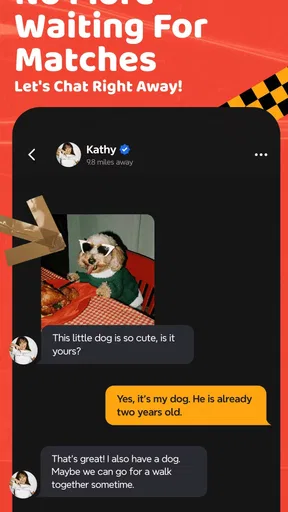

 Analysis by AppCompare
I approached Uniee: Easy Chat & Local Date as a practical choice for people who want to meet nearby singles without turning the process into a complicated project. It sits in the lifestyle category, but its real purpose is social discovery: starting conversations, deciding who feels worth replying to, and working out whether an online connection deserves a safe meeting in person. That sounds simple, yet the quality of the experience depends heavily on how you use it and what you expect from it.
My first impression is that Uniee is best understood as a low-commitment way to open doors rather than a guaranteed matchmaking service. The app is free to install, which makes it easy to try, and its store summary focuses on meeting real people, chatting with local singles, and finding either romance or casual fun. I would recommend approaching it with curiosity, patience, and sensible boundaries rather than treating every conversation as a likely relationship.
How I would decide whether Uniee fits
The most important decision is not whether the app looks appealing in the store. It is whether its style matches the kind of connection you want. Someone hoping to browse local possibilities, exchange a few messages, and see where things go may find the format comfortable. Someone searching for a highly structured compatibility process, detailed relationship coaching, or a tightly filtered community may prefer a different kind of dating service.
I also considered how much effort a user is willing to spend separating genuine interest from empty conversation. Local dating apps can feel lively because there are many possible contacts, but volume is not the same as quality. Uniee works better when I treat each new chat as an early conversation, not as evidence that a person is trustworthy, compatible, or ready to meet.
The app has a Mature 17+ content rating, so it is clearly aimed at an adult audience. That should shape how it is used: keep conversations respectful, avoid sharing sensitive details too quickly, and remember that a mature rating does not remove the need for personal safety. I would also check the age and intentions of anyone I considered meeting, and I would arrange a first meeting in a public place while telling someone I trust where I am going.
Uniee was released on February 6, 2025, and the current version is 1.2.9. Those details matter because a relatively recent app can still be refining its social experience. I would keep the app updated and judge it by how smoothly it handles everyday use, not only by its initial presentation. The minimum requirement of Android 8.0 also makes it accessible to many older Android phones, which is useful if you are not using a recent device.
The kind of user who will get the most from it
I see the strongest fit for people who want a straightforward local dating option and do not mind taking responsibility for the filtering themselves. It can suit a person who has recently moved to a new area, someone who wants to widen a small social circle, or a user who prefers starting with messages before deciding whether to meet. It may also appeal to people who are open to both romantic and lighter social connections, since the app presents itself as covering love and fun rather than only one narrow goal.
Worth Reading Before You Choose

EA SPORTS FC Mobile 26 Is a Bigger Football Game, but It Takes Time

Flipboard Shows What News Apps Must Do Beyond the Feed

Switching to Android Auto Means Rethinking Your Driving Routine

Google Calendar Makes a Crowded Week Easier to Manage

Ludo King Makes the Most of the Minutes Between Plans

Baby Panda World Brings Quick Play to Modern Phones, but Its Game Library Feels Busy
It is less suitable for anyone who dislikes uncertainty. If you want every profile to come with extensive context, clearly explained compatibility reasoning, or a carefully managed path from introduction to date, the open-ended nature of local chatting may feel tiring. I would also skip it if you are not comfortable declining conversations, spotting pressure, and moving slowly with strangers.
A realistic evening with the app
Imagine finishing work and having a little time before dinner. Instead of spending the entire evening scrolling without a plan, I would open Uniee with one modest goal: identify a few local conversations that seem respectful and relevant. I would read profiles carefully, look for details that give me something specific to ask, and send a message that refers to the person rather than using the same greeting everywhere.
If someone responds warmly, I would keep the first exchange light. A useful early conversation might establish whether we live close enough to meet, whether we want similar things, and whether the other person communicates in a way that feels comfortable. I would not rush to move the conversation elsewhere or reveal my home address. If the interaction becomes vague, demanding, or inconsistent, ending it is more useful than trying to rescue it.
That workflow highlights one of Uniee's practical strengths: it can fit into a short daily routine. The trade-off is that the app does not make the judgment for you. You have to decide which chats deserve time, which questions are appropriate, and when an online connection has earned the possibility of a public meeting.
Where Uniee feels strongest in everyday use
The clearest advantage is its direct focus on local interaction. Instead of treating dating as a distant browsing exercise, the concept encourages conversations that could realistically lead to something nearby. That does not guarantee better matches, but it changes the useful question from “Is this person interesting?” to “Could this connection work in real life?” Location and practical availability often matter as much as shared interests.
I also like the low barrier to trying it. Uniee is free, so a curious user can explore the basic experience without paying before knowing whether the local pool is active or whether the conversation style feels natural. That is especially valuable for people who have become frustrated with paying for a service before discovering that it does not suit their area.
The app has reached over 500 thousand installs, with an average rating of 4.2 from around 31 thousand ratings. I would read that as evidence that many users find the overall idea worthwhile, while still remembering that a rating cannot tell me whether the people nearby match my own expectations. A dating app can be well received overall and still feel quiet, repetitive, or unsuitable in one particular location.
Another strength is the possibility of keeping the first step conversational. For users who dislike making an immediate decision based only on a quick visual impression, messaging can reveal tone, patience, humor, and basic compatibility. I would use that opportunity deliberately. A profile may attract attention, but the quality of a reply often tells me more about whether continuing is sensible.
Three habits that make the experience more useful
My first practical tip is to create a small conversation filter before opening the app. I would decide what matters most to me, such as distance, relationship intention, communication style, or availability. Without that filter, it is easy to spend time replying to people who are pleasant but fundamentally looking for something different. A simple internal checklist makes local browsing less random.
Second, I would avoid treating fast replies as proof of interest or slow replies as automatic rejection. People have different routines, and a dating conversation should not become a test of constant availability. I would look for consistency over several exchanges: does the person answer the question asked, show curiosity, and respect a reasonable pace? That is a more useful signal than response speed alone.
Third, I would keep the first meeting deliberately easy to leave. A coffee shop, a busy public venue, or another place where I could end the meeting without depending on the other person is a better choice than an isolated location. I would arrange my own transport and avoid making a first date financially or logistically difficult. This is not a criticism unique to Uniee; it is the sensible cost of meeting someone first encountered online.
A fourth habit is to pause before paying for anything. The app includes in-app purchases ranging from $0.99 to $499.99 per item. That is a very wide range, so I would not assume that a small initial purchase represents the possible total cost. I would read each purchase screen carefully, identify what the payment actually changes, and set a personal spending limit before buying. Free access makes testing easier, but it does not mean every useful action will necessarily remain free.
What can create friction
The open local-chat model can produce uneven conversations. Some contacts may be engaging, while others may be brief, unclear, or focused on moving too quickly. I would not blame the app for every poor interaction, because user behavior is part of any social network, but the result is still a real limitation: finding a good conversation may require patience and repeated filtering.
There is also a difference between discovering someone nearby and finding someone genuinely compatible. Local proximity is useful, but it can encourage users to overlook mismatched expectations. I would ask about intentions early enough to avoid wasting time, while keeping the question natural rather than turning the first chat into an interview.
Paid options may introduce another layer of friction. A free app is attractive when I am only exploring, but purchases can change how carefully I need to manage the experience. The highest listed item price is substantial, so I would be particularly cautious about tapping through prompts when tired, excited, or emotionally invested in one conversation. If the app is being used by a younger adult who is legally permitted to access mature content, I would still encourage a strict budget and no impulse spending.
Privacy is another area where my behavior matters more than the app's promise. I would avoid sharing a workplace, home address, financial details, identity documents, or private photographs with a new contact. I would also be wary of anyone asking for money, gift cards, emergency help, or account access. A local dating context can make a stranger seem more familiar than they really are, so I would verify trust gradually.
When another type of dating app may be better
Uniee is not automatically the best option for every dating goal. A profile-heavy service may fit better if you want to spend more time presenting your values, interests, lifestyle, and long-term plans before chatting. That kind of alternative can reduce some uncertainty, although it may also make setup feel more demanding and can encourage people to over-polish their presentation.
A compatibility-led service may be preferable for someone who wants the app to organize potential matches around a more explicit relationship framework. The advantage is structure; the disadvantage is that structured matching can feel restrictive when attraction grows from an unexpected conversation. Uniee's more open approach is better for discovery, while a compatibility-focused alternative may be better for users who already know exactly what they want.
For people mainly seeking new friends, a general social or interest-based community could be a better fit than a dating-centered app. Shared activities can provide a more natural starting point and reduce the pressure of deciding whether every interaction is romantic. On the other hand, those services may not make local dating intentions as clear, so Uniee has an advantage when the purpose is openly meeting singles.
There is also a case for choosing a service with a narrower community if you have a specific preference or need. A broad local app can offer variety, but a specialized platform may make it easier to find people who share a particular lifestyle, age range, or relationship objective. I would choose Uniee when flexibility matters more than precise filtering, and I would switch categories when repeated chats show that my needs are too specific for a broad audience.
The real cost of switching between services
Trying Uniee does not require abandoning every other option, but switching can cost time and attention. You may need to rebuild a profile, repeat introductory conversations, and learn a different rhythm for browsing and messaging. I would not move simply because one evening feels quiet. I would compare the quality of conversations over several sessions and ask whether the problem is the app, my profile, my location, or my expectations.
If I decided to leave, I would first note which parts of my profile produced useful conversations. Perhaps a clear statement about intentions worked better than a clever but vague description. I would carry that lesson to another service without copying private conversations or oversharing personal information. The goal of switching should be to improve fit, not merely to restart the same habits somewhere else.
Money deserves special attention during a switch. Because Uniee is free to install but offers optional purchases, I would review any spending before moving on and avoid buying more just to justify what I have already spent. That is a common trap in social apps: continuing because of previous effort or payment rather than because the current experience is genuinely useful.
I would also preserve my boundaries when moving a conversation between apps. A person who was respectful inside Uniee should remain respectful elsewhere, and a request to move immediately to a private channel is not automatically a sign of trust. Switching communication spaces should happen because it is convenient for both people, not because one person is applying pressure.
My recommendation for different kinds of users
For a user who wants a free starting point for local dating conversations, I think Uniee is worth trying. Its purpose is clear, the entry cost is low, and the local focus can make online interaction feel more connected to everyday life. I would give it a fair trial with a specific routine rather than opening it endlessly: update the profile honestly, start a few thoughtful conversations, and evaluate the quality of replies instead of counting matches or messages.
For someone seeking a serious relationship, I would recommend using it with explicit communication. Say what you are open to once the conversation has enough context, and pay attention to whether the other person responds with similar clarity. Uniee can be part of that search, but I would not rely on any single app to do all the screening or emotional work.
For casual social contact, it may be a comfortable option if you are willing to keep expectations realistic. The store summary includes both love and fun, so the app is not presented as a one-purpose relationship service. Even so, different users can interpret casual connection differently. Clear, respectful communication is the best way to avoid turning that flexibility into confusion.
I would advise skipping it if you want a heavily guided matching system, dislike messaging strangers, or find it difficult to control optional spending. I would also choose another category if local availability is the only thing that matters and your area produces too few worthwhile conversations. No app can manufacture compatibility where there is no active or suitable community.
Overall, Uniee is most convincing as an accessible local conversation tool, not as a shortcut to romance. Developed by UltraMatrix Limited, it combines a free starting point with a mature audience and optional purchases, so the best experience comes from using it intentionally. I would download it when I wanted to explore nearby connections without a large upfront commitment, keep my personal and financial boundaries firm, and switch to a more specialized alternative if my goals demanded deeper filtering or a more structured path.
My final advice is simple: give the app a clear purpose before you begin. If that purpose is meeting respectful local people and seeing whether conversation develops naturally, Uniee can be useful. If you expect instant certainty, perfectly matched profiles, or a fully managed dating journey, it will probably disappoint. Used patiently and cautiously, it earns a place among the easier lifestyle apps to test, while still leaving the most important decisions in your hands.
Pros
- Simple interface makes starting conversations quick.
- Location-based discovery can help find nearby people.
- Useful filters make it easier to narrow down potential matches.
- Chat features are easy to understand for new users.
- Suitable for casual conversations and local social connections.
Cons
- The local user pool may be limited outside major cities.
- Some features may require in-app purchases or a subscription.
- Location-based matching can raise privacy concerns for some users.
- Responses may vary widely depending on activity in your area.
- As with any dating app
- users should watch for fake or misleading profiles.
FAQs for Uniee: Easy Chat & Local Date
What is Uniee: Easy Chat & Local Date, and how does it work?
Uniee: Easy Chat & Local Date is a social and dating app designed to help people discover nearby users, start conversations, and potentially build romantic or friendly connections. After creating a profile, you can usually browse available members, review profile information, and use the app’s chat features to communicate. The experience depends heavily on the number of active users in your location.
Is Uniee: Easy Chat & Local Date free to download and use?
The app may be available to download at no initial cost, but some functions can require in-app purchases, credits, or a subscription. Features such as unlimited messaging, enhanced visibility, profile promotion, or seeing certain interactions may be restricted depending on the current version and your region. Before paying, check the store listing and subscription terms carefully, including renewal and cancellation conditions.
Does Uniee verify user profiles and protect personal information?
Dating apps can include reporting, blocking, or profile-moderation tools, but users should not assume that every account has been fully verified. Avoid sharing your home address, financial details, private documents, or sensitive images with someone you have just met. Review Uniee’s privacy policy to understand how profile data, messages, location information, and account details may be collected, stored, or used.
Can I find people near me on Uniee, and is location access required?
Local discovery is one of the app’s main purposes, so Uniee may use your approximate location to show potentially compatible users nearby. Location permission may be requested during setup, although the exact requirement can vary by device and app version. If you prefer greater privacy, review the permission settings on Android or iOS and allow only the access you are comfortable providing.
What safety precautions should I follow when using Uniee?
Use the app carefully and take time to learn about a person before arranging a meeting. Keep conversations inside the platform until trust has been established, be cautious of requests for money or urgent favors, and report suspicious behavior through the available tools. If you meet someone offline, choose a busy public place, tell a friend where you are going, and arrange your own transportation.


